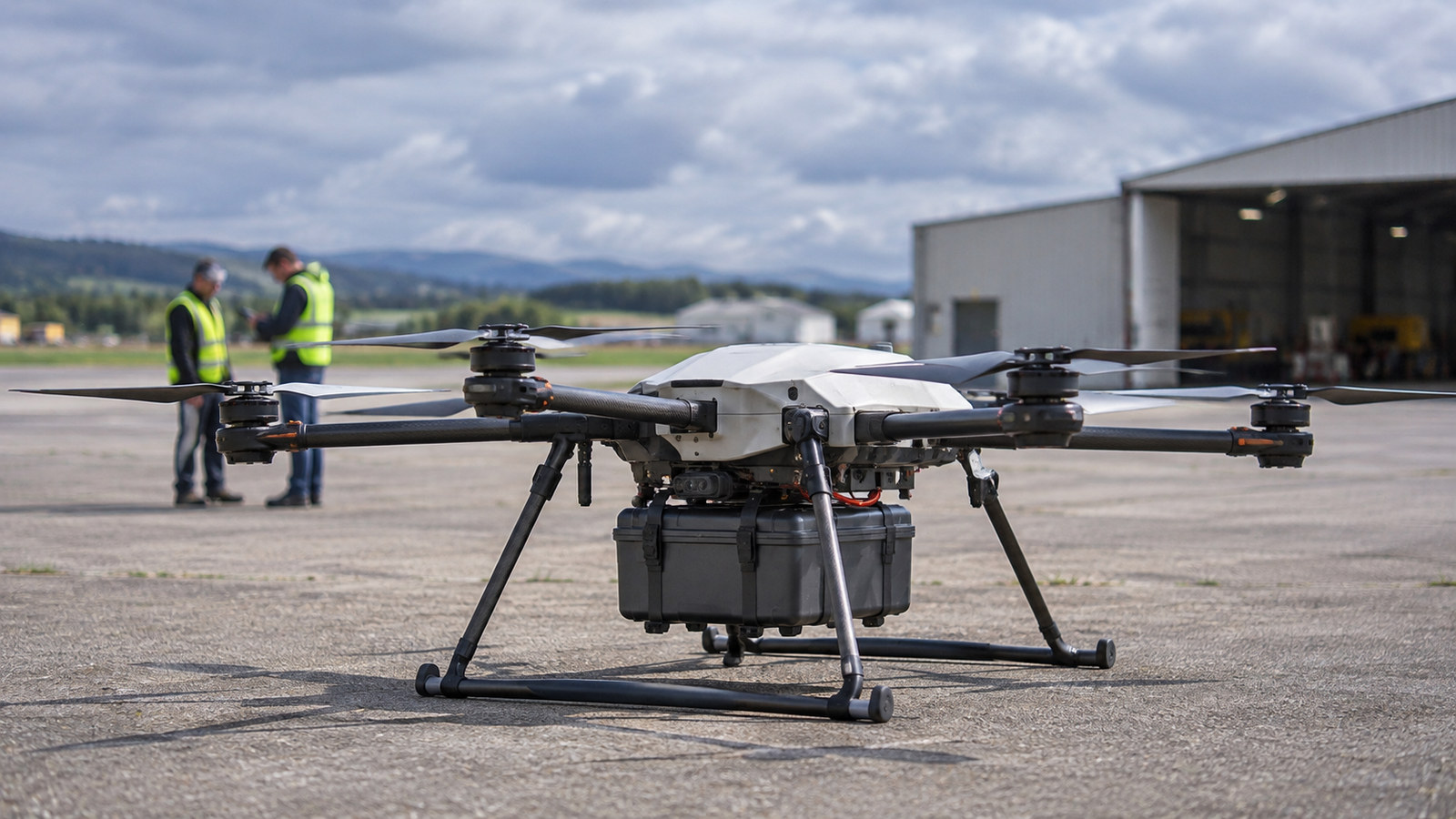
The European Di-PEGASUS project has concluded after three years of research into the technological, regulatory, and societal requirements for integrating drones and advanced air mobility services into European airspace. The program’s final event was held in Rome on November 5, 2026, bringing together representatives from industry, research centers, and European institutions.
The event presented the project’s results and addressed the transition from research and development to practical advanced air mobility applications. Di-PEGASUS was coordinated by Unifly Consulting, the legal operating name of EuroUSC Italia, and brought together industrial partners, research organizations, and stakeholders from the aviation sector.
Technology Developments and Impact Assessment
The consortium presented several developments produced during the project, including solutions from Collins Aerospace and the Centre for Research and Technology Hellas. RINA Consulting demonstrated human-machine interfaces, while Capgemini Portugal developed a platform to assess impacts associated with deploying these services.
Unifly Consulting oversaw consortium activities, monitored the implementation of use cases, and supported assessments of public acceptance. These assessments included surveys and workshops involving members of the public and aviation professionals.
Infrastructure, Business Models, and Public Acceptance
The sessions also addressed potential advanced air mobility uses and business models, as well as obstacles to their commercial adoption. Issues examined included integration with existing aviation systems and infrastructure, social acceptance of operations, and the economic viability of future services.
According to the project’s conclusions, the development of advanced air mobility depends on three main areas: physical and digital integration with existing infrastructure; the creation of economically sustainable business models; and public engagement on issues including safety, privacy, and noise.
Di-PEGASUS received European Union funding under grant agreement No. 101096000.
Source: Unmanned Airspace
What is your view on this information? We invite you to leave a comment and share the article on your social media channels.
Comments must comply with ClaveDefensa’s participation rules. Failure to do so may result in removal.