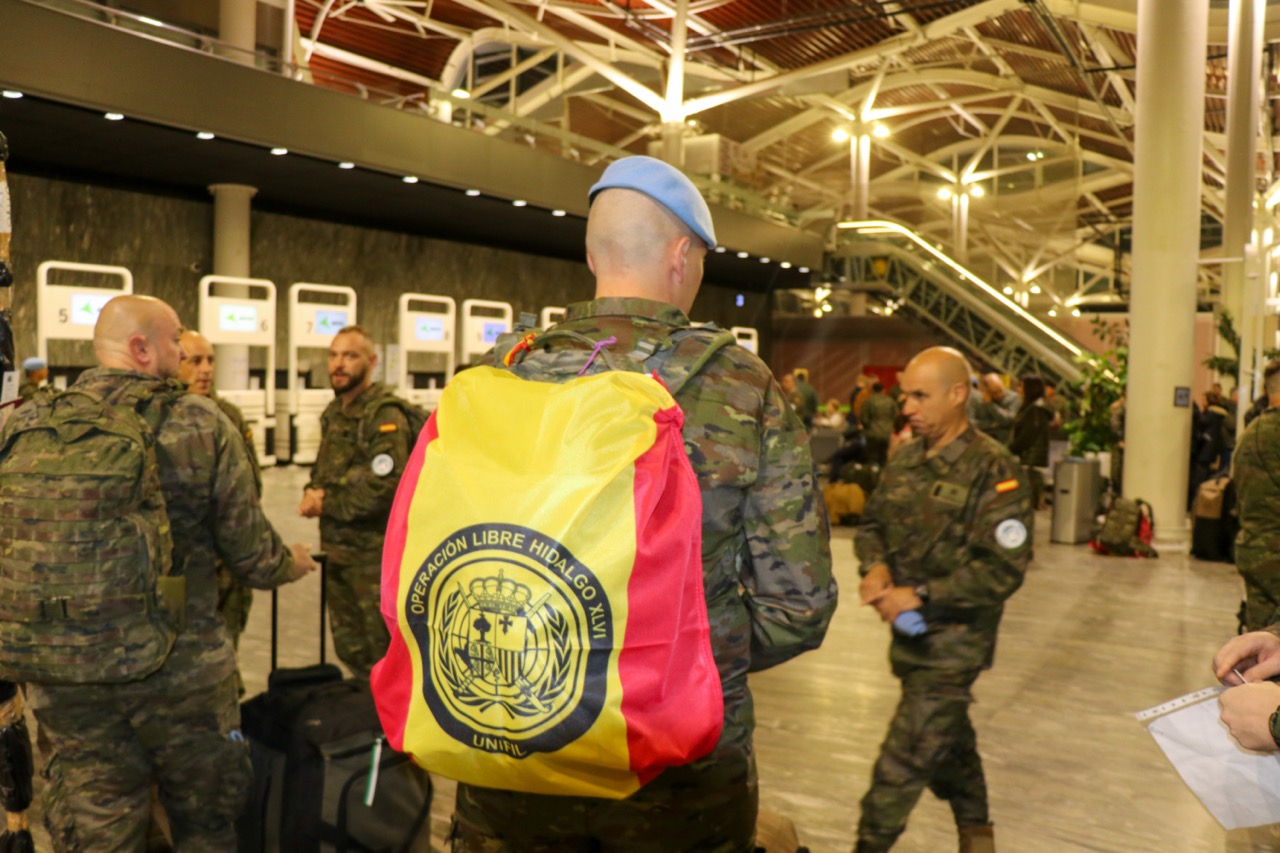
The more than 600 personnel of the Libre Hidalgo XLVI contingent are beginning their deployment under General Calero. The Spanish force will take part in the conclusion of the UN mandate and the start of the international withdrawal in 2027.
The Aragón I Brigade has begun deploying the Libre Hidalgo XLVI contingent to Lebanon, where it will assume command of the East Sector Multinational Brigade of the United Nations Interim Force in Lebanon (UNIFIL). The operation, which began with the departure of the first personnel from Zaragoza Airport on November 11, will involve more than 600 troops and coincide with the end of the United Nations mandate and the beginning of the withdrawal of its forces.
General Calero, commander of Aragón I Brigade, will lead the East Sector multinational structure for approximately six months. The contingent will carry out its duties during a transition phase that includes the continuation of UNIFIL’s assigned responsibilities through December 31, 2026, and the start of the drawdown on January 1, 2027.
UN Security Council Resolution 2790 (2025) establishes that the mission will end its operational mandate at the close of 2026 and that the withdrawal of its personnel and equipment will be conducted in an orderly and secure manner over a maximum period of one year. The decision creates new planning and coordination requirements for deployed contingents, although details of the specific withdrawal schedule for Spanish units have not yet been made public.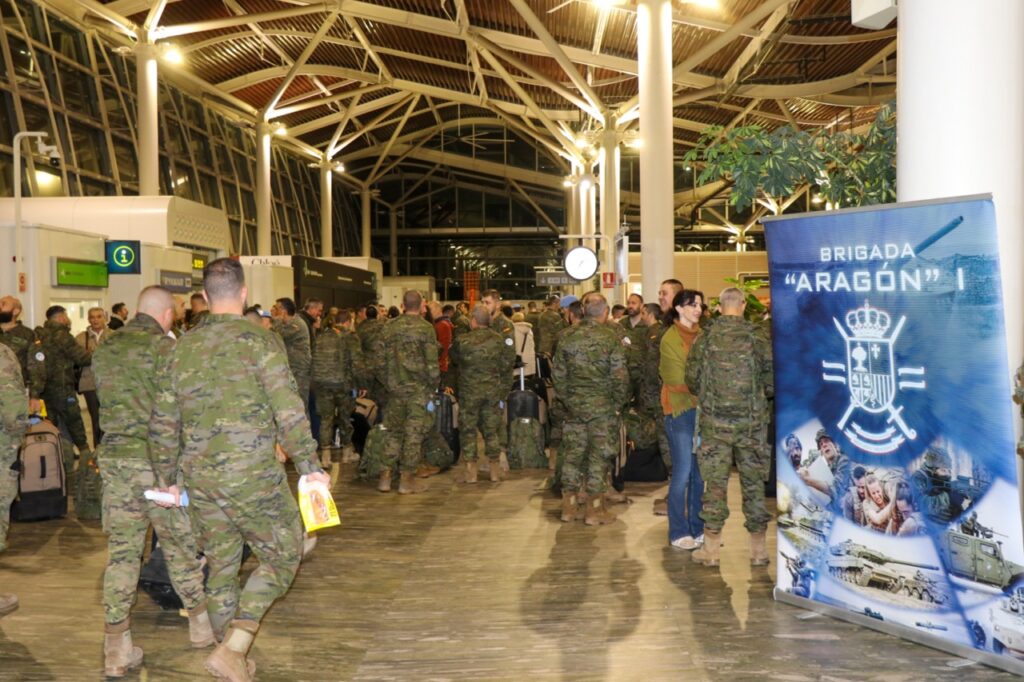
Composition and capabilities of the Libre Hidalgo XLVI contingent
The force’s core comes from Aragón I Brigade, part of the Spanish Army’s Castillejos Division. Its units include the Barcelona Infantry Regiment No. 63, around which the Cataluña Protected Light Tactical Group, one of the contingent’s principal operational organizations, has been formed.
The deployment also includes personnel from Logistics Support Group 41 (AALOG 41), whose participation strengthens the force’s logistics-support component. These units are joined by a Civil Guard detachment assigned military police duties.
The regional composition reflects the origins of the participating units. According to information released by Aragón I Brigade, nearly 30 percent of the contingent comes from Zaragoza and 15 percent from Catalonia. Women account for more than 10 percent of the personnel in the rotation.
The structure combines maneuver units, logistics support and military police—components required for the operation of a contingent deployed on a multinational mission. Available official information does not, however, detail the vehicle inventory, specific protection assets or additional resources that could be used during the drawdown.
The UNIFIL drawdown: a new operational phase
The latest extension of UNIFIL’s mandate was approved by the Security Council on August 28, 2025, through Resolution 2790. The decision sets the end of the mission for December 31, 2026, followed by a withdrawal period that must be completed within one year.
During this phase, international forces will retain certain capabilities to ensure the security of their personnel and facilitate the departure of their forces. The resolution provides for measures related to facility protection, movement security, evacuations and medical assistance, along with other functions authorized during the withdrawal process.
For the Libre Hidalgo XLVI contingent, the change in mandate means confronting a phase different from standard rotations. Organizing the drawdown will have to balance troop security with coordination among the various national units that make up the multinational force and the relevant authorities.
The Aragón I Brigade press release confirms that its personnel will participate in the start of this process, but does not specify which positions must initially be vacated, what materiel will be repatriated or what procedures will be followed to transfer facilities. Nor has the departure schedule for each Spanish unit been publicly specified in the documentation reviewed.
Spain’s role in concluding the operation
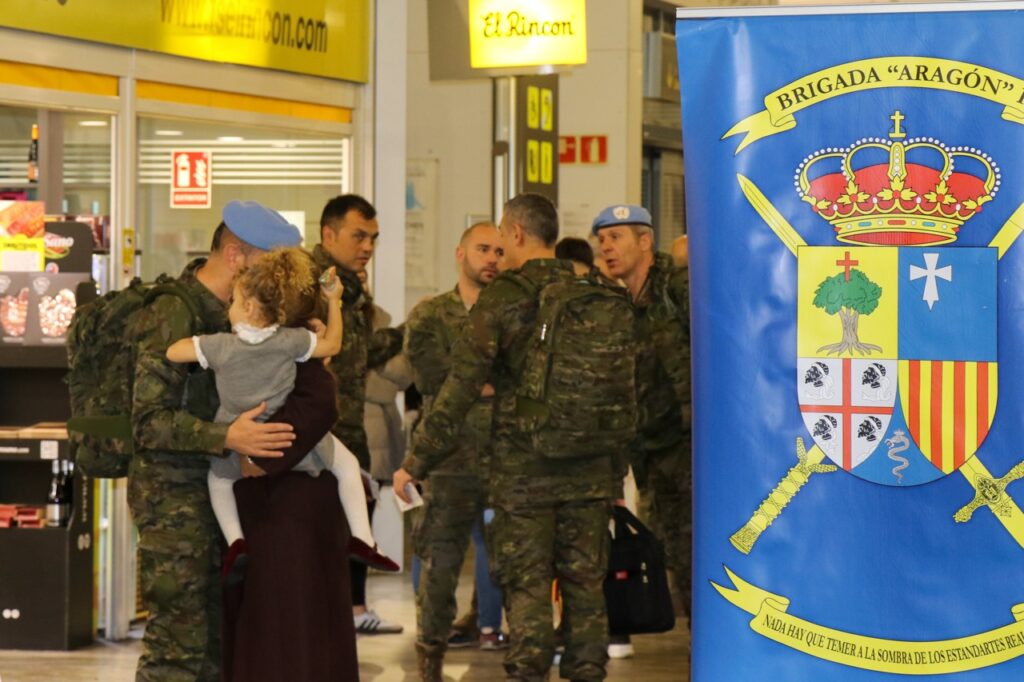
Spain has maintained a military presence in UNIFIL since September 2006, following the reinforcement of the mission approved through Security Council Resolution 1701. Over the past two decades, the Spanish Armed Forces have participated in the stabilization and monitoring tasks conducted by the United Nations in southern Lebanon.
Aragón I Brigade now takes on a command responsibility in the East Sector as the international operation approaches its end. The Libre Hidalgo XLVI contingent will have to complete its assigned functions during the mandate’s final weeks and subsequently participate in the initial withdrawal actions.
The deployment also marks another rotation for Spanish Army units linked to Aragón and Catalonia, which provide a substantial share of the personnel. Their mission will be shaped by UN decisions on implementation of the drawdown and by the security situation in the area of operations.
Resolution 2790 establishes the general framework for the withdrawal, but leaves its operational execution subject to the corresponding planning. In that context, Aragón I Brigade’s command will have to direct the responsibilities assigned to the East Sector as the gradual reduction of the international presence in Lebanon begins.