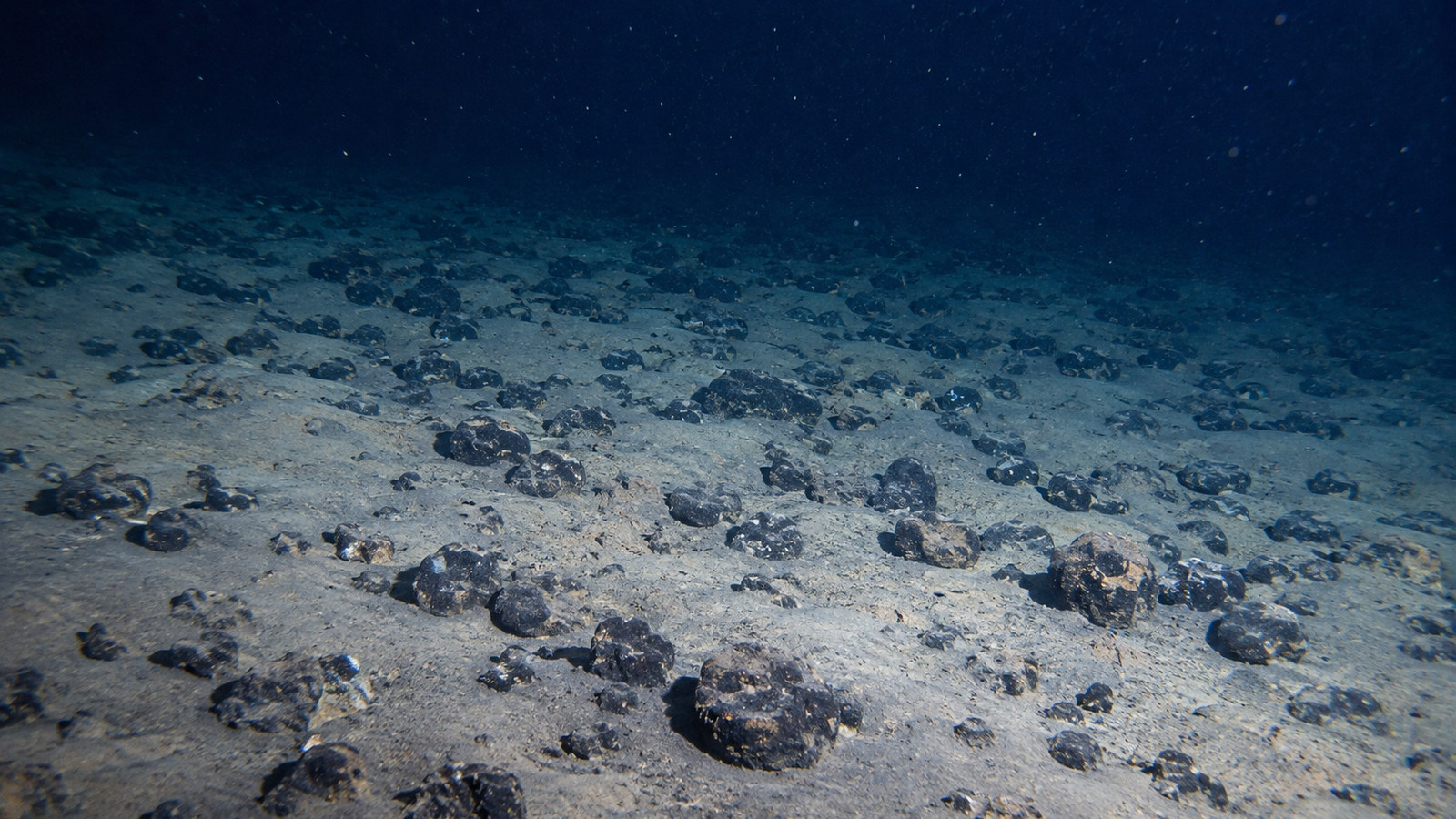
The Donald Trump administration has awarded the first US deep-sea mining permits in two Pacific areas off American Samoa, despite a ruling by a federal court in Hawaii that found the approval process preceding the auction unlawful. The awarded areas total approximately 31 million acres, or 12.5 million hectares, and sold for a combined $6 million.
Each of the two areas was awarded for $3 million, although the identities of the buyers were not disclosed. The permits would allow exploration for polymetallic nodules on the seabed—formations containing nickel, copper, and cobalt, raw materials used, among other applications, in batteries and electric-vehicle systems.
Court ruling before the awards
US District Judge Jill Otake of Hawaii ruled in favor of community groups and environmental organizations, finding that the National Marine Fisheries Service had violated the Endangered Species Act in authorizing the auction. The judge said the agency had not even attempted to assess the potential effects of the activity on species protected under the law.
Interior Secretary Doug Burgum subsequently defended the action, describing it as the first US auction of offshore critical-mineral permits in the Pacific. Burgum said the awards would make it possible to better understand the resources off American Samoa and determine whether they could contribute to a more reliable domestic supply.
The auction followed an executive order signed by Trump in April 2025, which characterized US leadership in deep-sea science and technology as a core national security and economic interest. The process also responded to a request from Impossible Metals, a US company that asked for the area to be opened to permitting.
Local and environmental opposition
Residents and environmental organizations have challenged mining activity in the area. Risks cited by critics include the dispersal of waste across marine life and the effect of heavy-machinery noise on the migration of various species.
Julia Singer, Oceana’s advocacy campaign manager, warned that moving forward with extraction without fully understanding the importance of deep-sea ecosystems could have catastrophic consequences for generations. American Samoa banned deep-sea mining in its own territorial waters in 2024, although the auctioned areas are on the federally controlled Outer Continental Shelf and lie beyond that boundary.
Governor Pulaali’i Nikolao Pula said in September that he did not support commercial seabed mineral extraction “at this time.” The awarded areas are near the Rose Atoll Marine National Monument, which provides habitat for threatened or endangered species including whales, turtles, sharks, and corals.
Chris Eaton, an attorney with Earthjustice, called the decision to proceed with the auction after the court ruling illegal and said the organization would use every available legal avenue to try to overturn the permits.
Source: Euronews
What do you think about this report? We invite you to leave a comment and share the article on social media.
Comments must comply with ClaveDefensa’s participation rules. Failure to do so may result in removal.