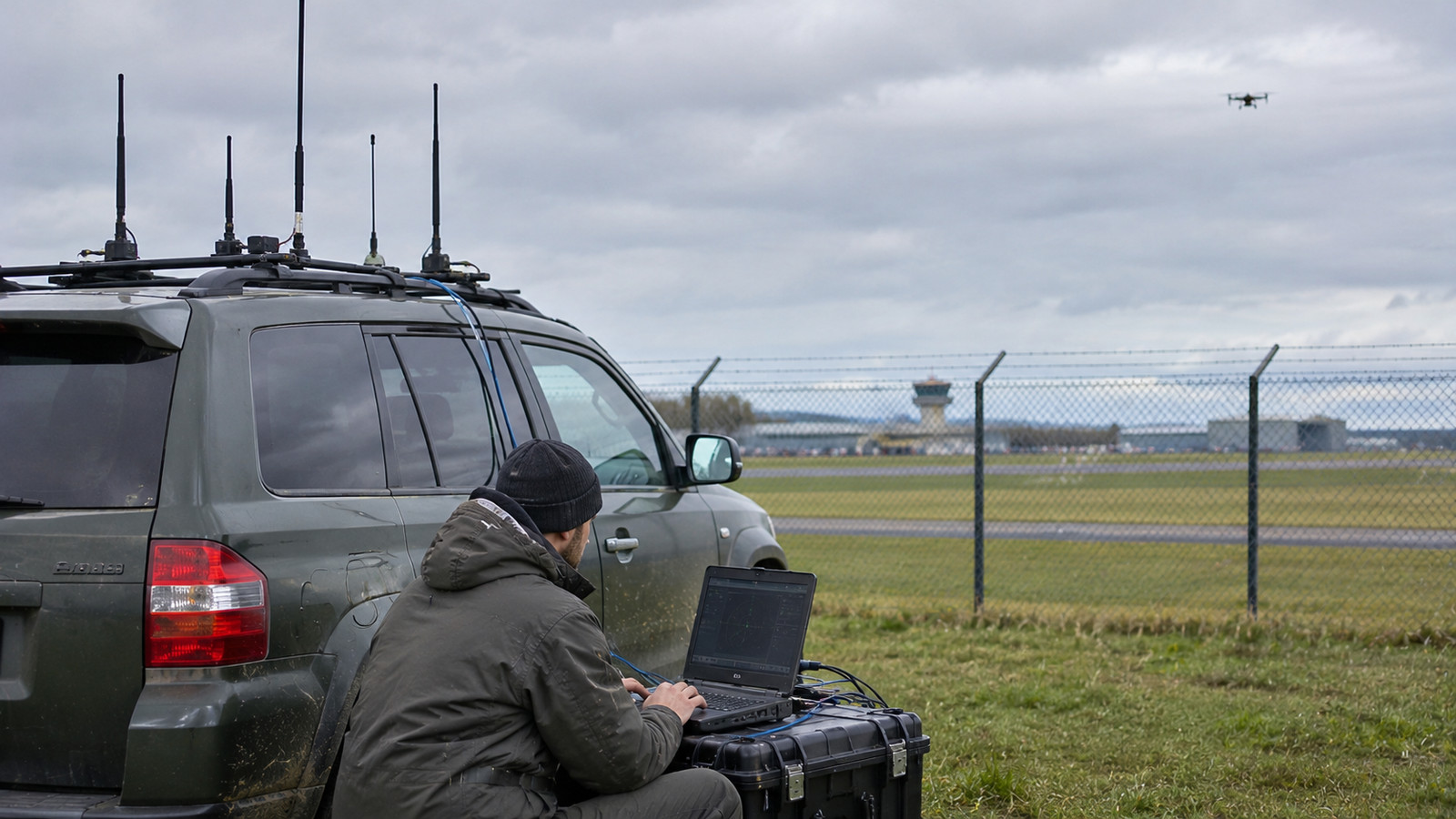
BAE Systems is developing passive radar technology designed to detect and track air threats without transmitting signals of its own or disclosing the system’s position, the company has reported. The device uses transmissions already present in the environment and, according to BAE Systems, is intended as a lower-cost alternative to current passive radars.
Unlike conventional radars, which transmit energy to locate targets, the system uses existing television and radio signals to identify objects in the airspace. Chris Shepherd, CUxS product lead in BAE Systems’ Digital Intelligence & Land division, said the technology can use those emissions without interfering with them.
The company envisages its use for the surveillance of critical infrastructure, including power plants and air bases, against potential drone attacks. It also anticipates applications in combat environments, although the information provided does not specify operational configurations or the system’s maturity for those missions.
Vehicle Deployment and Three-Dimensional Tracking
The radar is sized for deployment from SUV-type vehicles and is designed to track targets of varying dimensions, from small drones to larger aircraft. According to BAE Systems, the system produces a three-dimensional representation of the airspace and provides data on the speed, heading, range, and altitude of detected targets.
The company has not released figures on the technology’s range, accuracy, or anticipated cost, nor has it detailed how it compares with other available passive radar systems.
Trials Planned for 2027
BAE Systems plans to conduct live trials of the technology in 2027 with partners from law enforcement, the defense sector, and critical-infrastructure operators. The countries, cities, or facilities where those trials will take place have not been disclosed, and no results from the announced testing are available.
Source: Unmanned Airspace
What do you think of this report? We invite you to leave a comment and share the article on your social media channels.
Comments must comply with ClaveDefensa’s participation rules. Failure to do so may result in expulsion.