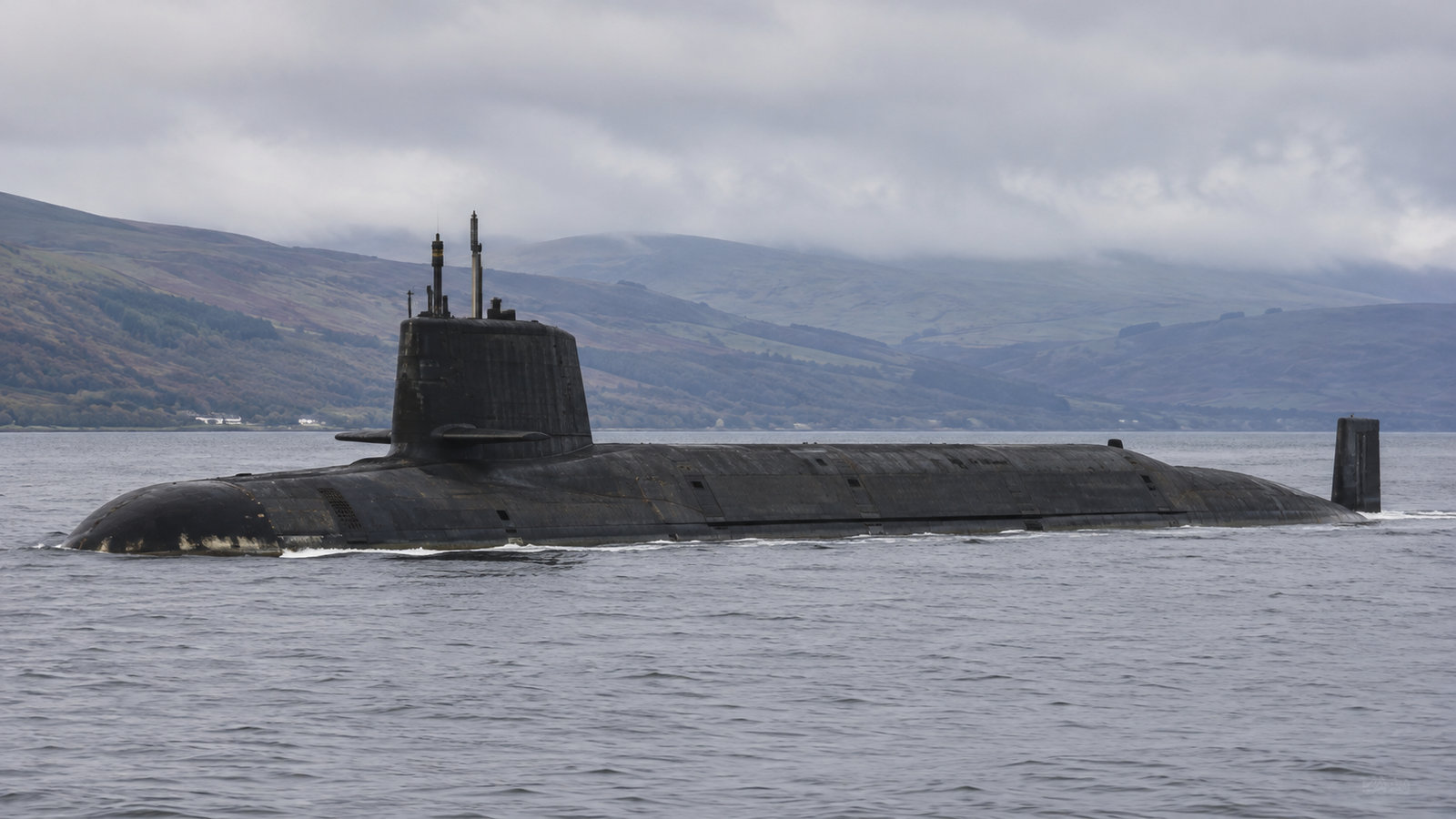
The British submarine HMS Vengeance has returned to Scotland after a 217-day patrol, the longest yet attributed to a unit of the United Kingdom’s nuclear deterrent force. The deployment exceeds the 205 days reached by HMS Vanguard in April and again puts the availability of a fleet facing lengthy maintenance periods under scrutiny.
The four Vanguard-class submarines underpin the United Kingdom’s policy of permanently maintaining at least one submarine armed with Trident ballistic missiles on patrol. The strategy is intended to preserve the UK’s ability to respond from the sea should other military infrastructure be severely damaged.
Patrols Exceeding Expected Durations
Vanguard-class submarines were initially designed to conduct missions lasting about three months. Their early patrols lasted between three and four months, while 100-day deployments were uncommon. The duration of recent missions therefore represents a substantial increase over those parameters.
Nuclear submarine specialist David Cullen has noted that three months underwater already represented a lengthy period for a crew operating in a confined environment with very limited contact with the outside world. Longer patrols also require embarking additional food and supplies, which must be stored in the submarine’s available spaces.
According to available information, budget cuts and slower maintenance work have contributed to longer deployments. The cited experts also link these patrols to delays in the maintenance of aging submarines, as well as greater psychological pressure on their crews.
A Fleet Nearing the End of Its Intended Service Life
HMS Vengeance, launched in 1998, is one of four Vanguard-class submarines. It is approximately 150 meters long, displaces 17,526 tons, and has 16 launch tubes for Trident ballistic missiles capable of carrying several independently targetable warheads.
The Vanguard submarines were designed to operate for roughly 25 years, but delays in the entry into service of their replacements mean the current boats are expected to remain in operation for about 40 years. The first submarine of the new class, HMS Dreadnought, is expected to enter service around 2032.
During patrols, ballistic missile submarines remain submerged and maintain radio silence to reduce the risk of detection. Crew members may receive weekly family messages, known as Familygrams, of up to 120 words. Those communications are reviewed before delivery, and sailors cannot reply; as a result, some may spend months without learning of important family events or being able to respond to the news they receive.
Pressure on the submarine service also coincides with allegations of harassment and discrimination against female personnel. In 2022, Sophie Brook, one of the first women to serve in Royal Navy submarine crews, said she had endured constant sexual harassment during her service. In 2024, the then-head of the Royal Navy, Admiral Sir Ben Key, apologized and described misogyny in the submarine service as intolerable.
Source: Euronews
What do you think about this report? We invite you to leave a comment and share the article on your social media channels.
Comments must comply with ClaveDefensa’s participation rules. Failure to do so may result in removal.